
Are you looking for information on youth sports training? We can help!
Every parent wants their child to enjoy sports without getting hurt. They want their child to have the best experience with a personal trainer, but you also understand that growing bodies face different risks than adult athletes.
Youth sports training should build skills safely, not push kids too fast. That is something Infinite Performance Training is proud of, and why in this article, we walk parents like yourself through proper athletic development, common injury risks, and how professional guidance helps young athletes stay strong and confident.
What Are the Key Benefits of Youth Sports Training for Kids?
Here’s the part most parents don’t hear enough. Youth sports training is not just about making kids faster or stronger. It’s about building a body that moves well and a mindset that handles challenges.
Well-structured training helps kids develop:
- Better balance, coordination, and body awareness
- Stronger muscles and joints that protect growing bones
- Safer movement patterns that reduce injury risk
- A foundation that supports any sport they choose later
Instead of pushing kids to specialize too early, proper youth sports training focuses on overall athletic development. That means fewer overuse injuries, better long-term performance, and a healthier relationship with sports. Kids learn how to move correctly first, then how to move faster and stronger over time.
GET IN TOUCH
Schedule a Training Session
How Does Youth Sports Training Enhance Physical and Mental Health?
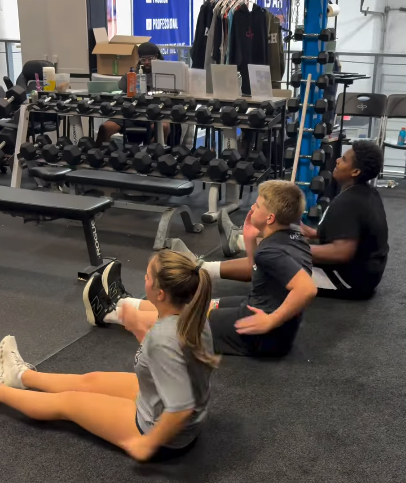
Did you know there is research showing that youth sports training can improve academic performance, confidence, and mental health? Growing bodies don’t respond to stress the same way adult bodies do. That’s why youth training must be intentional, not intense for the sake of intensity.
Physically, structured training improves:
- Strength without excessive strain
- Flexibility that supports healthy joints
- Endurance built gradually, not forced
- Recovery habits that prevent burnout
Mentally, the benefits are just as important. Youth sports training teaches kids how to:
- Focus on technique instead of fear of failure
- Handle mistakes without shutting down
- Build discipline through routine, not pressure
- Develop confidence in what their body can do
Kids who train properly tend to enjoy sports more. They feel capable instead of overwhelmed. That mindset plays a major role in reducing stress, anxiety, and dropout rates in youth athletics.
What Social and Confidence Gains Do Young Athletes Experience?
Confidence doesn’t come from winning alone. It comes from competence. When kids know how to move well, they stand taller both on and off the field.
Youth sports training creates social benefits that show up quickly:
- Kids feel more comfortable participating in team activities
- Communication improves through guided group training
- Athletes learn how to give and receive feedback
- Peer relationships strengthen through shared progress
Confidence grows because success becomes repeatable. Kids see improvement they can control, not outcomes they can’t. That builds resilience. They’re more willing to try new sports, speak up, and handle competitive situations without fear.
Over time, these social and confidence gains extend beyond athletics. Kids carry them into school, friendships, and everyday challenges, which is one of the most lasting benefits of youth sports training done right.
How to Implement Age-Appropriate Youth Strength and Conditioning Programs?
Imagine a training plan as a roadmap for young bodies — it guides them safely from simple movement skills to more advanced athletic abilities without pushing them too far, too fast. Strength and conditioning for youth athletes isn’t about lifting heavy weights or hitting high training volumes. It’s about teaching proper movement patterns, building foundational strength, and progressing gradually as the child grows and matures. Scientific reviews show that properly designed youth resistance training is both safe and effective when it matches the child’s age and developmental stage and is supervised by qualified professionals.
For example, early programs may focus on basic resistance and bodyweight skills and emphasize technique over load. Recommendation guidelines suggest that programs might start with light resistance, with a young athlete completing 10-15 repetitions without significant fatigue, and gradually progress as technique improves.
This age-appropriate progression:
- Teaches safe movement fundamentals
- Builds balanced strength across muscle groups
- Reduces risk of injury from improper loading or technique
- Creates a foundation that supports sport-specific training later
In short, kids progress like students learning a new language — mastering basics before adding complexity — and expert supervision makes this both effective and safe.
What Are Safe Resistance and Bodyweight Exercises for Different Age Groups?
The safest exercises are those that first teach control and balance. According to sports medicine research, bodyweight and light resistance training reduce injury risk when form is prioritized.
General guidelines by age group:
- Ages 6–9: Bodyweight squats, crawling patterns, balance drills
- Ages 10–13: Push-ups, resistance bands, controlled lunges
- Ages 14+: Structured resistance training with proper technique and supervision
Scientific consensus shows these exercises improve motor skills and joint stability while avoiding excessive joint stress when coached correctly.
How Does Plyometric and Speed Training Improve Kids’ Sports Performance?
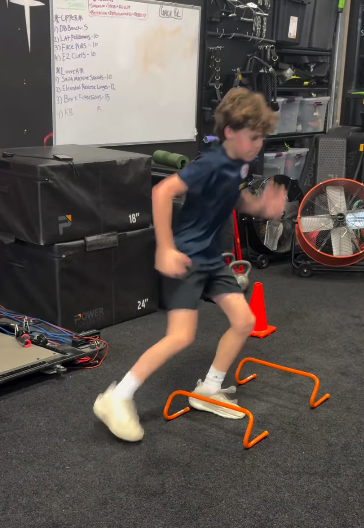
Speed and power are largely neurological in youth athletes. Studies show that short, low-impact plyometrics improve coordination, reaction time, and sprint mechanics without increasing injury risk when volume is controlled.
Key benefits supported by research:
- Faster muscle activation
- Improved running efficiency
- Better change-of-direction ability
When introduced gradually, plyometric and speed training enhance performance by teaching kids how to safely absorb and produce force. The result is quicker movement, better control, and fewer non-contact injuries during play.
What Are Effective Youth Sports Injury Prevention Strategies?
Here’s the reality most studies agree on. Injuries in youth sports are more often caused by poor preparation than by bad luck. Research from sports medicine and pediatric exercise science shows that prevention works best when training focuses on movement quality, workload control, and recovery.
Effective injury prevention strategies include:
- Teaching proper movement mechanics early
- Avoiding year-round single-sport overload
- Gradually increasing training intensity and volume
- Monitoring fatigue and growth-related changes
Which Warm-Up and Recovery Techniques Reduce Injury Risks?
A surprising number of youth injuries happen before full activity even starts. Studies show that structured warm-ups can reduce injury risk by up to 40 percent compared to unstructured or skipped warm-ups.
Effective warm-ups focus on:
- Dynamic movements that increase blood flow
- Mobility drills for hips, ankles, and shoulders
- Light activation of core and stabilizing muscles
Recovery matters just as much. Research highlights that youth athletes recover best with:
- Light cooldown movement instead of sudden stopping
- Adequate sleep and hydration
- Scheduled rest days, especially during growth spurts
How Does Strength Training Contribute to Injury Prevention in Youth?
This is where science has shifted dramatically. Multiple studies now confirm that properly supervised strength training reduces injury risk in youth athletes, rather than increasing it.
Strength training helps by:
- Improving joint stability
- Strengthening muscles that protect ligaments
- Enhancing balance and body control
- Reducing non-contact injuries
Research also shows that youth athletes with a background in strength training experience fewer knee, ankle, and shoulder injuries. The key factor is supervision. Exercises must be taught correctly, loads must progress slowly, and training must match the athlete’s developmental stage.
When done properly, strength training doesn’t just make kids stronger. It makes them safer, more confident movers who can handle the demands of sport without breaking down.
What Is Long-Term Athlete Development and Why Is It Important?
Long-Term Athlete Development, or LTAD, is a training approach based on how kids grow, not how fast they can win. Research shows athletes who follow LTAD models develop better movement skills, stay healthier, and remain active longer. Instead of rushing results, LTAD builds strength, coordination, and confidence in stages that match physical and mental development.
How Does LTAD Promote Holistic Youth Athletic Growth?
LTAD supports the whole athlete, not just sport-specific skills. Programs focus on mobility, strength, coordination, and recovery alongside mental resilience and confidence. Studies show this balanced approach reduces injury risk, improves performance across multiple sports, and helps kids enjoy athletics without burnout or pressure.
Why Should Early Specialization Be Avoided in Youth Sports Training?
Research consistently shows that children who play multiple sports develop better overall athleticism and fewer injuries. Avoiding early specialization allows muscles, joints, and movement patterns to develop evenly, creating healthier and more adaptable athletes over time.
How to Choose the Right Youth Sports Training Program for Your Child?
A shiny facility or a packed schedule doesn’t equal quality. The right youth program should improve physical fitness and agility while keeping safety front and center. Look for programs that prioritize movement fundamentals, gradual progression, and age-appropriate performance training. The best fit helps your child move better, feel confident, and stay healthy across seasons, not just win the next game.
Key signs you’re on the right track:
- Emphasis on movement quality before intensity
- Clear progression plans tied to growth stages
- Balanced focus on strength, speed, coordination, and recovery
What Criteria Should Parents Use to Evaluate Youth Sports Programs?
One of the easiest ways to spot a quality program is to compare how it trains kids versus how it protects them.
| Program Focus | Lower-Quality Program | Higher-Quality Program |
|---|---|---|
| Training style | Sport-only drills | Full performance training |
| Physical fitness | Conditioning without structure | Strength, mobility, and agility combined |
| Progression | Same workload for all kids | Individual, age-based progression |
| Injury prevention | Reactive | Built into training |
| Recovery | Rarely addressed | Planned and monitored |
| Safety awareness | Minimal | Clear protocols and supervision |
GET IN TOUCH
Schedule a Training Session
How Do Coach Qualifications and Safety Protocols Impact Program Quality?
Coach education is one of the strongest predictors of injuryreduction in youth sports. Qualified coaches understand how kids grow, how fatigue affects movement, and when to slow things down.
High-quality programs prioritize:
- Coaches trained in youth development and biomechanics
- Structured warm-ups and cooldowns
- Clear emergency plans and access to first aid
- Safe training environments with proper supervision
When coaches are properly qualified, agility and performance improve without sacrificing safety. Kids learn how to move efficiently, recover properly, and handle physical challenges with confidence.
What Are Sport-Specific Youth Training Techniques for Enhanced Performance?
Good youth training doesn’t copy adult drills; in fact, the two have different needs.
Youth training done right adapts movements to the demands of each sport while respecting how kids grow. Sport-specific training focuses on transferable skills like speed, balance, coordination, and decision-making, not just repetition. Research shows that athletes who train this way improve performance while reducing injury risk because their bodies learn to move efficiently under game-like conditions.
Which Drills Improve Speed and Agility in Youth Soccer and Basketball?
Speed in youth sports isn’t just running fast. It’s starting, stopping, and changing direction under control.
For soccer, effective drills include:
- Short acceleration sprints with quick stops
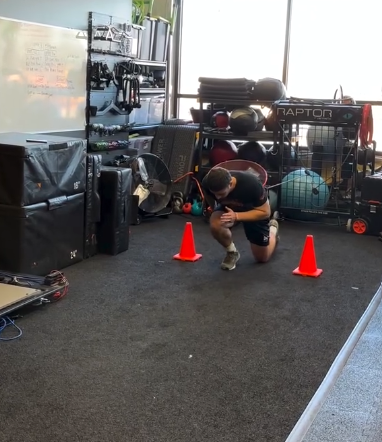
- Cone drills that mimic cutting and directional changes
- Reactive footwork drills tied to ball movement
For basketball, agility improves through:
- Lateral shuffle drills that mirror defensive slides
- Quick first-step drills from an athletic stance
- Change-of-direction drills combined with hand coordination
These drills work because they train the nervous system as much as the muscles. Research shows youth athletes improve speed and agility fastest when drills are short, controlled, and technique-focused.
In NOVA, where the basketball and soccer youth travel scenes are so demanding, focusing on the basics is vital!
How Can Nutrition and Mental Toughness Support Sport-Specific Training?
Nutrition and mental toughness play a critical supporting role in sport-specific training by helping young athletes train consistently and recover properly. Balanced nutrition provides the energy needed for practices, supports muscle repair, and helps maintain steady physical fitness during growth. Mental toughness develops through positive coaching, goal-setting, and learning to handle mistakes and pressure.
The Verdict on Youth Sports Training
Our philosophy at Infinite Performance Training is simple: Youth sports training should build strength, confidence, and resilience, not pressure or burnout.
When physical development and mental well-being are addressed together, kids thrive on and off the field. We take pride in seeing our student athletes excel in class, off the field, in life, and with their overall well-being. For us, training youth goes well beyond the physical aspect, but also the infinite gains as well!

 How Old Should a Child Be for Personal Training? Youth Fitness Experts Explain