We get this question all the time: How Old Should a Child Be for Personal Training? Or, what is the best age for personal training?
The question isn’t “How old should my child be?” It’s “Is my child ready?” Youth personal training works best when it matches a child’s physical and emotional development.
In this guide, the team at Infinite Performance Training will walk you through how our youth fitness experts determine the best time for youth personal training!
How Old Should a Child Be for Personal Training?
The best age to train? Yeah, there isn’t a single age for everyone.
There’s no magic birthday that suddenly makes personal training “safe.” That’s the first thing youth fitness experts agree on. Age matters, but readiness matters more. Two kids the same age can be at completely different stages physically and mentally.
In general, many children can begin structured, supervised personal training as early as elementary school if the focus is on movement quality, balance, coordination, and basic bodyweight strength. As kids grow into pre-teen and teen years, training can gradually become more structured and challenging, adding resistance, speed, and sport-specific work.
What experts avoid is adult-style training applied too early. Things like heavy loads, high volume, or pressure to perform before a child is ready increase injury risk and burnout. When personal training is age-appropriate and professionally guided, it supports healthy development instead of rushing it.
Students can focus on form, balance, speed, and agility, and build a strong athletic and fitness foundation early when done right!
What Youth Fitness Experts Consider Before Allowing Personal Training
Before any child begins personal training, experienced youth fitness professionals look beyond age and ask a much more important question. Is this child ready? Readiness is evaluated across several areas, all supported by sports medicine and developmental research.
First is movement competency.
Can the child control their body through basic movements without pain or compensation? Poor movement patterns increase injury risk, regardless of age. Personal training often starts only after these fundamentals are assessed.
Next is the physical development and growth stage.
Kids grow unevenly. Bones, muscles, and coordination don’t always develop at the same rate. Experts account for growth spurts, joint stability, and overall physical fitness before progressing intensity.
Mental and emotional readiness is equally important.
Personal training requires listening, following cues, and handling corrections. A child who can focus, accept feedback, and stay engaged is more likely to benefit from training and less likely to get hurt.
Experts like those at Infinite Performance Training of NOVA also review:
- Injury history or recurring pain
- Current sport participation and training volume
- Signs of fatigue, burnout, or overtraining
- Recovery habits like sleep and nutrition
Finally, safety protocols matter. Qualified programs ensure proper supervision, gradual progression, and clear boundaries between what a child can do and what they should do. This approach is why research consistently shows that professionally guided youth training reduces injury risk instead of increasing it.
Youth fitness experts don’t greenlight personal training based on age alone. They look at the whole child. When readiness, safety, and development align, personal training becomes a powerful tool for building healthy, confident, and resilient young athletes.
GET IN TOUCH
Schedule a Training Session
Why Personal Training Is Different from Team Practices
Team practices and personal training serve very different purposes, and neither replaces the other. Team sports are built around competition, strategy, and group performance. Personal training is tailored to each child’s body, movement, and needs.
Here’s a clear side-by-side to show the difference:
| Area of Focus | Team Practices | Personal Training |
|---|---|---|
| Primary goal | Team performance and skills | Individual development and safety |
| Attention level | One coach to many athletes | One-on-one or very small groups |
| Movement quality | Often assumed, rarely corrected deeply | Assessed and corrected consistently |
| Strength & conditioning | Limited or generic | Age-appropriate and customized |
| Injury prevention | Secondary to sport demands | Core focus of the program |
| Progression pace | Same for everyone | Adjusted to the child’s readiness |
| Addressing weaknesses | Difficult in group settings | Central to the training plan |
Team practices are excellent for learning sports skills, teamwork, and competition. What they often lack is time. Coaches rarely have the ability to stop practice to correct one athlete’s movement pattern or to adjust a child’s workload as they grow rapidly.
Personal training fills that gap. It focuses on how a child moves, how their body handles stress, and how to prepare them physically so they can participate in team sports more safely and effectively. When combined, team practices and personal training support each other rather than compete.
Is Strength Training Safe for Kids? What the Science Says
This is one of the most common concerns parents have, and the science is clear. Properly supervised strength training is safe for children and adolescents.
Multiple studies from pediatric sports medicine organizations show that youth strength training does not damage growth plates when programs are age-appropriate and coached correctly. In fact, research consistently links supervised strength training to lower injury rates, stronger bones, and better joint stability.
What makes strength training safe for kids:
- Emphasis on technique over weight
- Gradual progression based on development, not age alone
- Qualified supervision and coaching
- Exercises matched to coordination and maturity
What makes it unsafe is poor instruction, excessive loading, or treating kids like small adults.
Strength training for youth looks very different from adult lifting. It often starts with bodyweight movements, light resistance, and controlled patterns that teach kids how to stabilize and control their bodies. As they grow, resistance increases slowly and intentionally.
The result is not bulky muscles or stunted growth. The result is stronger joints, improved posture, better balance, and reduced risk of common youth sports injuries like knee, ankle, and shoulder problems.
When guided by professionals who understand youth development, strength training becomes one of the most effective ways to keep kids active, resilient, and confident as athletes.
Signs Your Child Is Ready for Personal Training
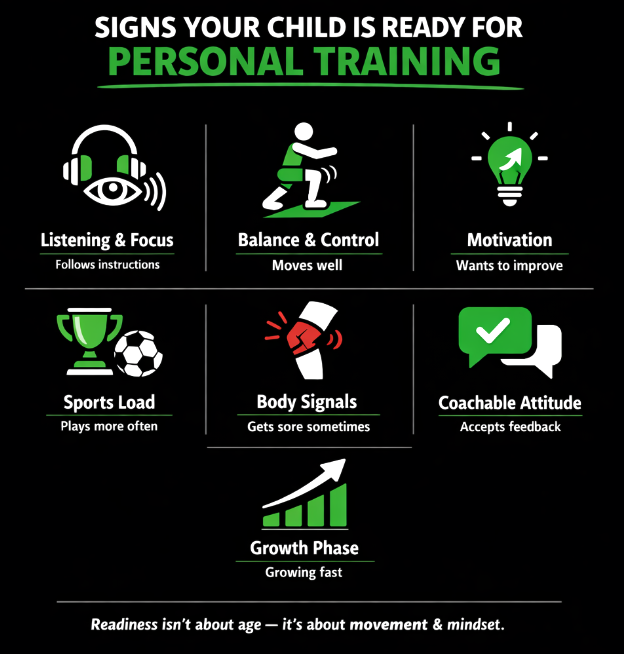
Here’s an important mindset shift for parents. Readiness for personal training shows up in behaviors and movement patterns, not birthdays. Youth fitness experts look for clear signs that a child can benefit from structured, one-on-one training safely.
1. Your child can follow instructions consistently.
Personal training requires listening, focus, and the ability to apply feedback. If your child can stay engaged during practice or drills, they’re more likely to benefit from guided training.
2. Basic movement patterns look controlled
Squatting, lunging, pushing, pulling, and jumping should look balanced and pain-free. Training often starts once a child can perform these movements without excessive wobbling or compensation.
3. They show interest in improving, not just competing
Kids who want to get stronger, move better, or prevent injuries tend to respond well to personal training. Motivation doesn’t need to be intense, just genuine.
4. Sports participation is increasing
As practices, games, and seasons add up, the body experiences more stress. Personal training helps manage that load and reduce injury risk.
5. Minor aches appear after activity
Occasional soreness can signal growing demands. Training can address weaknesses before those aches turn into injuries.
6. Your child handles correction without frustration
Being coached one-on-one means frequent feedback. A child who accepts guidance calmly will progress faster and more safely.
7. They’re entering a growth phase
Growth spurts often affect coordination and balance. Training during these periods helps kids adapt safely.
Signs to Not Start Youth Personal Training
Just as important as knowing when to start is knowing when to wait. In some cases, personal training should be delayed or modified!
If a child struggles to follow directions or becomes easily overwhelmed, structured training may cause frustration instead of benefit. In these situations, unstructured play or group movement activities may be more appropriate.
Personal training may also be postponed when:
- There is ongoing pain that hasn’t been medically evaluated
- The child shows signs of burnout or emotional stress related to sports
- Growth-related coordination issues are severe and require a gentler approach
- Motivation comes solely from outside pressure rather than from the child
Waiting does not mean missing out. It often means giving the body and mind time to catch up. When training starts at the right moment, it supports confidence, safety, and long-term enjoyment of physical activity.
Common Parent Questions About Kids and Personal Training
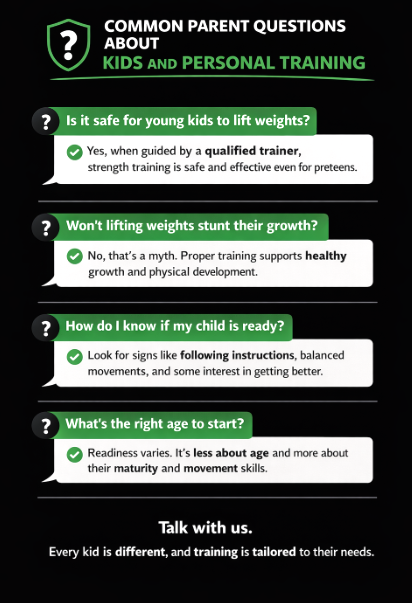
Here are the questions youth fitness professionals hear most often, with clear, practical answers.
Is personal training safe for kids?
Yes, when it’s led by a coach with proper personal trainer certification and real experience working with youth. Safety comes from age-appropriate programming, supervision, and understanding how growing bodies respond to exercise. This requires more than general fitness knowledge. It requires training in youth development and exercise physiology.
What certifications should a youth personal trainerhave?
Parents should look for recognized trainer certification programs and ongoing education. Certifications like NASM emphasize movement quality, corrective exercise, and evidence-based training. Youth-focused trainers should also hold current cardiopulmonary resuscitation and first aid credentials.
Will personal trainingimprove enduranceor just strength?
Proper youth training develops the full athlete. That includes strength, coordination, balance, and endurance. Programs are designed to support overall physical capacity, not max effort or heavy lifting. Endurance improves through smart progressions, not long conditioning sessions.
How do trainershandle different learning styles?
Kids don’t all learn the same way. Some respond to visual cues. Others need hands-on guidance or simple verbal instruction. Quality youth programs adapt coaching methods to different learning styles, which improves understanding, confidence, and safety during training.
Is personal trainingbetter than team practices?
They serve different purposes. Team practices focus on sport skills and competition. Personal training focuses on how the child moves, recovers, and handles physical demands. Together, they support healthier development than either alone.
How do trainersknow when to progress or slow down?
Progression is based on movement quality, fatigue levels, growth changes, and response to training. Coaches trained in exercise physiology understand when the body is ready for more and when it needs a reset.
These questions all point to the same takeaway. Personal training for kids works best when it’s guided, flexible, and built around the child, not expectations or timelines.
Final Word on Age and Youth Training
There is no perfect age for youth personal training.
You have learned that the right time depends on your child’s movement, maturity, and the confidence you, as a parent, will recognize in your child. When training matches a child’s development, it becomes a tool for safety and long-term growth, not pressure or risk. However, if your child isn’t ready, that is perfectly ok to wait a year or two!
That said, we offer free assessments and evaluations here at Infinite Performance Training, so feel free to reach out below to schedule a 1-on-1 intake session!

 The 14-Day Ultimate New Year Kickstart in Gainesville, VA